24 Jun 26
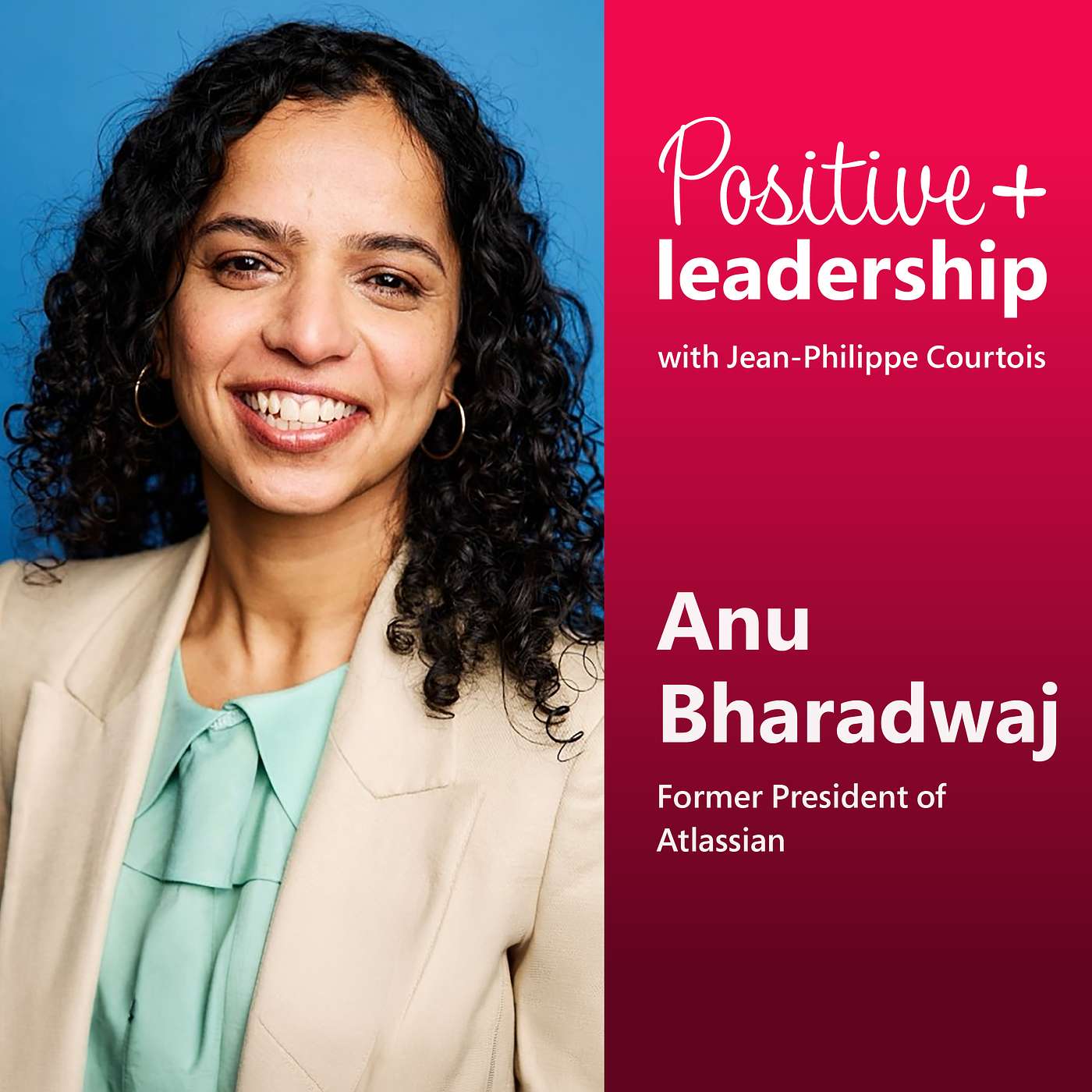
Anu Bharadwaj: AI Won't Save a Team That Fears It
Podcast summary
Six months into her first management job, Anu Bharadwaj got the feedback no leader wants to hear: she was too intense, she pushed her team too hard. She was stunned. She was only asking them to do what she would do herself.
Anu Bharadwaj began at Microsoft building video games, then made a bold leap to Atlassian in 2014, where she rose from product lead on Jira to COO and then President. Along the way she shaped Team Anywhere, led one of the company's hardest cloud transformations, and kept returning to a single question: how do teams actually work better together?
I came to this conversation as someone who made the same early mistake she did. In my first years at Microsoft I was known as Mr Plus, always asking for more, always raising the bar, until coaching taught me the difference between driving people and leading them. Anu and I share a Microsoft DNA, and most of this episode felt like comparing notes.
In our conversation, we explore:
→ Why leading people is never about you, and the manager feedback that taught her the hard way
→ How a values exercise she runs with every team becomes the real source of psychological safety
→ Energy management over time management, and why self-care is not selfish
→ Why an AI rollout fails when leaders treat it as a tools problem instead of a human fear
→ What an AI-native company actually looks like, and why judgment stays human
"When you lead people, it is not about you. It is about them. You want to understand what they want, and take them to a place they want to go." Anu Bharadwaj, former President of Atlassian
If you have ever pushed a team toward your finish line and wondered why they were not following, this conversation will stay with you.
RELATED EPISODES
- Pete Carroll, Seattle Seahawks head coach (2021), Learning to "always compete": https://www.buzzsprout.com/1798971/episodes/9268299
- Kathleen Hogan, Microsoft Chief People Officer (2022), Empowering people to achieve more: https://www.buzzsprout.com/1798971/episodes/10382268
- Ranjay Gulati (2023), Creating purpose-driven teams: https://www.buzzsprout.com/1798971/episodes/12903145
New here? Subscribe to Positive Leadership & You for one edition a month, written for leaders who want to build companies and communities people thrive in. https://www.linkedin.com/newsletters/positive-leadership-you-6970390170017669121/
Want to go deeper? Listen to the Positive Leadership Podcast on your favourite platform. 130+ conversations with the leaders, founders and thinkers shaping a more human future of work.
🎧 Apple Podcast: https://podcasts.apple.com/fr/podcast/positive-leadership/id1574911588
🎤 Spotify: https://open.spotify.com/show/1EdnJcYgh9nXPTFJ5euOBf
Transcript
JEAN-PHILIPPE COURTOIS: You
JEAN-PHILIPPE COURTOIS: Hello and welcome to Positively H.E. Podcast, the podcast that helps you grow as an individual, as a leader, and eventually as a global citizen. I'm Jean-Philippe Courtois. Today I'm delighted to welcome a leader who combines product ethos, operational excellence, leadership at scale, and a deeply human view of teamwork. She began, by the way, at Microsoft, the company that you know I know really well, where she learned how to build for developers at scale. then made a bold leap to Atlassian in 2014 and rose from head of products for JIRA to COO and then president. And along the way, she helped shape Team Anywhere, led one of Atlassian's bolder CI chapters, and kept really asking a question matters more than ever, how do you help teams truly work better together? So it's really a pleasure to welcome Anubharar Vashj. Very warm welcome possibly to the podcast.
ANU BHARADWAJ: Thank you so much JP, it's a pleasure to be here.
JEAN-PHILIPPE COURTOIS: So I knew a restart, as you may know, coming back to the past. And so a few months ago, I was in the Silicon Valley on a learning tour. This is where we met for the audience. And you are speaking on the panel about a momentum of AI with some of the startups. You as you mentioned, you're struck by your leadership style, thoughtful, grounded, deeply human as well. And I must admit to our listeners also share a Microsoft connection. Right after that panel, I came to you basically and I asked you to join the podcast and you accepted. And so here we are today. So I'm starting again with the very beginning. I you grew up in India. You studied computer science in Bangalore. You love games. And then you crossed continents to start your career in the US. But let's start early on with your childhood in India. What values did your family instill in you? and what first sparked your love of technology?
ANU BHARADWAJ: Yeah, so I grew up in Bangalore in the 80s. I grew up in a middle-class family. I'm the youngest of three children. I was a shy and nerdy kid, very attached to my mom. And now as an adult, when I reflect back on my childhood, I realize what a sheltered, privileged, and empowering childhood it was in terms of the amount of independence and autonomy we were given as children. If I had to think about the values that shaped my childhood and what I received from my parents, one particular incident stands out. My mom would tell me this all the time. She would say, you know, when someone says you're beautiful or smart, how do you feel? Beautiful beauty and intelligence are lucky qualities to inherit. But really they're nothing to be proud of. You inherited those things. But when somebody says you are kind, resilient, how do you feel? Because kindness is a choice you made to care for another person, to share your meal, to offer your seat. A choice to be proud of. And resilience helps you overcome obstacles. Like you learn to swim despite your fear of water and you learned to do karate well despite losing your first fight. And so...
JEAN-PHILIPPE COURTOIS: Aha.
JEAN-PHILIPPE COURTOIS: Yeah.
ANU BHARADWAJ: Resilience is something to be proud of because you earned your way to that. that always stuck with me as kindness and resilience are values to be proud of.
JEAN-PHILIPPE COURTOIS: I love that. love that. mean, the clear distinction between our DNA and what we learn and what we decide to become. Who do we decide to become as humans, actually early on in our childhood? Any memories of some of the dinner discussions you had, again, as a child, maybe with your dad, your mom, siblings and others that are still on your mind today? The kind of discussion you are having.
ANU BHARADWAJ: Indeed. Yeah. So I lost my mom at a pretty young age. I was a teenager and she was diagnosed with cancer. And while she was sick, she told me, look, whatever you do, I want you to promise that you will finish your education and that you will get a job and you will be financially independent. And I thought, what's the big deal about this complete your degree thing? Why is it so important? I didn't.
JEAN-PHILIPPE COURTOIS: Hmm.
ANU BHARADWAJ: realized that as a teenager growing up. But once I did finish my degree, I landed my first job at Microsoft. And as an adult, I realized, oh my God, it is actually so important to have financial autonomy, especially for women. It's important to have that kind of independence to shape your own life. And so that really stuck with me. And ever since day one of being able to earn a living.
JEAN-PHILIPPE COURTOIS: Yeah. Yeah.
ANU BHARADWAJ: I've supported multiple education philanthropies, especially focused on underprivileged girls in rural India. And it's a very meaningful part of my life. I understand the importance of what she was saying now as an adult.
JEAN-PHILIPPE COURTOIS: Yeah.
JEAN-PHILIPPE COURTOIS: Mm.
JEAN-PHILIPPE COURTOIS: We'll come back to that later on, Ado, because I think it's really important again to connect the dots back to, again, who you were as a kid. What about your dad? In which ways did he influence your thinking, your behaviors, maybe later on as well, before you decided to go to the US, basically?
ANU BHARADWAJ: Yeah, my dad is big influence in my life. Even now, he's a very active 80 year old. And no matter where in the world I've lived over the last 20 or so years, he has visited me every year and he spent a few months with me each year. We're very close. And when growing up, one of the biggest things I learned from my dad is really about living with an open heart. He welcomes a lot of people into his life. He does his very best to help them no matter what inconvenience he has to go through, but he's open to new experiences. So that made me realize the value of curiosity and being open-hearted and welcoming new experiences and people into your life.
JEAN-PHILIPPE COURTOIS: Tell me when and how did you decide on your own, or maybe also with some recommendations from others, to basically get into engineering as a discipline and development? Why?
ANU BHARADWAJ: Yeah, that's a great question. Because growing up, I was very, like I said, I was a nerdy kid. I was very into science and math. my originally my ambition was very much to do the pure sciences. And my dad used to work at a company called Robert Bosch in India. And he was, he used to bring home these dot matrix printout sheets that we could write.
JEAN-PHILIPPE COURTOIS: Yes, of course.
JEAN-PHILIPPE COURTOIS: Yeah.
ANU BHARADWAJ: exercises on that my sister and I could write on. And so was asking that how, do these printouts look like this and why is it perforated? had never seen a device like that. But when I got into high school, he bought me a Pentium 386, which was one of the OG machines. on that, I yeah. And on that I learned, yes, it was Windows.
JEAN-PHILIPPE COURTOIS: Aha! on Windows. running Windows.
ANU BHARADWAJ: So my very first operating system was MS-DOS. And so on that I learned to play video games and eventually started to build video games. And I loved it. I thought it was the most incredible thing ever because you can translate your thinking and logic into something actually tangible and fun. And so that's basically how I got interested in computer science and programming.
JEAN-PHILIPPE COURTOIS: Of course.
JEAN-PHILIPPE COURTOIS: Yeah.
ANU BHARADWAJ: And in India, it's very, or at least during the time I was growing up, it is very much a templated thing that you'll either become an engineer or a doctor. But my parents were very open-minded and they basically said, you should choose what you want to work on. And initially I got into IIT, which is kind of like the Ivy league schools of India on a science program. But it also was around the time when my mom was
JEAN-PHILIPPE COURTOIS: Yeah, yeah.
ANU BHARADWAJ: diagnosed with cancer. And so I decided I'm not going to take that program, but I'm going to do computer science in the local college. I remember this was a distinct memory from then, that Dean was unhappy and the folks at IIT were like, nobody does this. You can't just leave this and go do something else. But that really stuck with me. And I guess it was a bit of a chip on the shoulder to make sure that I do something with my life and not regret that decision.
JEAN-PHILIPPE COURTOIS: Yes.
JEAN-PHILIPPE COURTOIS: Yes. Yeah. Now, what wonderful memories I knew. obviously, you just talked about the love you have for software development and games. And what a surprise when actually you started working with video games with Microsoft. So I'd like to go back to that early chapter of your life. How was it when you began working for Microsoft from India, by the way? and not in Redmond, was at the time, I guess, more rare. I they were already a pretty big hub of developers in India, but it's been growing since then. So how was it? And again, why did you keep building video games as a starting role just because of your passion for games?
ANU BHARADWAJ: I think I got lucky because Microsoft came to campus and they recruited very few people. And we weren't really given a choice of what project, but we were told a few things that we might be working on. the video game thing really appealed to me. It was called Terrarium and it was built on the .NET SDK.
JEAN-PHILIPPE COURTOIS: Yep.
ANU BHARADWAJ: JP, when I got the job, really couldn't believe that this was a real job. This was an actual job. was like, my God, I'll do this for free. But then when I joined Microsoft, was such a moving experience because I felt like, wow, MS-DOS, Windows 95, all the operating systems I've used. I actually have a chance to check in code into that code base. actually have a chance to build that.
JEAN-PHILIPPE COURTOIS: Yeah.
JEAN-PHILIPPE COURTOIS: Ha ha ha ha.
JEAN-PHILIPPE COURTOIS: Mmm.
JEAN-PHILIPPE COURTOIS: Yes. Yes. Yeah.
ANU BHARADWAJ: That really blew my mind. The fact that you can have an impact on so many people like myself. So that was definitely a big draw for me to join Microsoft.
JEAN-PHILIPPE COURTOIS: Hmm
JEAN-PHILIPPE COURTOIS: Yes. Yes.
JEAN-PHILIPPE COURTOIS: And how was it to get on board in Microsoft those years and again back in India? What did it look like? Yeah.
ANU BHARADWAJ: Yeah. Yeah. So I started in the India development center, which at the time was fairly small. I think it was something that Microsoft was experimenting with to see if it would be a scalable thing. But over my tenure at Microsoft, India development center grew from maybe just under a hundred people to over five, 6,000 people. So it scaled really well. But when I joined, it was quite
JEAN-PHILIPPE COURTOIS: Mm-hmm.
JEAN-PHILIPPE COURTOIS: Yeah.
ANU BHARADWAJ: small. So there was this sense of camaraderie and the sense of community. And because Microsoft had made this very intentional move that the culture be very similar to what Microsoft headquarters was, there were a number of people who had moved from Seattle to Hyderabad and India to sort of bootstrap the Dev Center.
JEAN-PHILIPPE COURTOIS: Yes. Yeah.
JEAN-PHILIPPE COURTOIS: Right.
ANU BHARADWAJ: So that was a really interesting time and a great first job, I think, because Microsoft, as you know, allows people to shift roles if you are amongst the top performers so you can maximize your experience then. And I made full use of that. So I tried different roles. And one day, met at a user conference, I met this person who said, you know, I use this build product. I was working on MS Build then.
JEAN-PHILIPPE COURTOIS: So are you.
JEAN-PHILIPPE COURTOIS: Yeah.
ANU BHARADWAJ: And I can go home and put my son to bed because I saved 20 minutes at the end because build automation does a lot of what I had to do manually. And that was a big moment for me where I felt like, all this fun and games we have at our desk has an impact on someone's real life. And so that drew me to product management, which felt like it was really suited very well and situated at a place between real problems and solutions and being the person that bridges it.
JEAN-PHILIPPE COURTOIS: Real life, Hmm.
JEAN-PHILIPPE COURTOIS: Yes. Yeah, I want to dig little bit into that, actually, Anouf, because I think you have an incredible curiosity, right? And as you said, you tried many hats, Microsoft, and then later on even more, as a developer, as a researcher, if I'm not mistaken, as a tester and during lead, before finding your way into product management. So what did that period of exploration teach you about yourself? And when did you realize that building products around real customer needs. Customers, because one day you met with customers, where's your true gift? So tell us about that story about the way you evolved from raw to get product and customer connection as well.
ANU BHARADWAJ: Yeah. So the thing that drew me into product management, like I shared was really the ability to have an impact on someone's life. But your question is really interesting in that it goes deeper as to what did you learn about yourself? And for me, I do this exercise with all the teams that I take on with every new team that I farm. do this exercise called core values exercise where
JEAN-PHILIPPE COURTOIS: Yeah.
JEAN-PHILIPPE COURTOIS: Yeah.
JEAN-PHILIPPE COURTOIS: Hmm.
JEAN-PHILIPPE COURTOIS: Yes.
ANU BHARADWAJ: you basically are given the list of body values and you sort them into what are the top 20 I like, what are the top 10 I like, what are the top three. And an interesting thing is I've done this over the last 20 years and the answers haven't changed. I think the way it manifests changes, but the core values themselves are not very different. And for me, my three core values are integrity, courage, and service.
JEAN-PHILIPPE COURTOIS: Haha, really?
JEAN-PHILIPPE COURTOIS: Mmm.
ANU BHARADWAJ: And so service is really the form in which a lot of my product building shows up in terms of, want to build something that has an impact on somebody's life. is, I want to be of use in this world where I can make someone's life better. And so I learned that that was very important to me as I look through different things and courage shows up as really the intention to try different things, to be open.
JEAN-PHILIPPE COURTOIS: Yeah.
JEAN-PHILIPPE COURTOIS: Mmm. Yep.
ANU BHARADWAJ: new learning and even if I'm wrong or even if that fails, I don't, yes, yeah, taking a risk. I really enjoy that and I chose up in both my personal and professional life as being able to do the hard thing when it's right, being able to do the right thing even when it is hard.
JEAN-PHILIPPE COURTOIS: taking some risk. Yeah.
JEAN-PHILIPPE COURTOIS: Hmm. Yeah.
JEAN-PHILIPPE COURTOIS: It's very interesting. Did you say, actually, Anu, that those three values, whether were the teams, stayed the same? mean the people, not you, right? Pick those values? Or was it a choice, personal choice from Anu? Saying those are going to be our values.
ANU BHARADWAJ: So the exercise is really interesting, JB, where you sort between different values. So you think about what does this mean for me? For example, responsibility is in one of my top three values. But when you're forced to pick, forced to focus on core values, these three stand out for me. So they are very personal to me. But the reason I do it as a team exercise is core values show up in the way you behave, whether at work or at home.
JEAN-PHILIPPE COURTOIS: Yes.
JEAN-PHILIPPE COURTOIS: Yes, yes.
ANU BHARADWAJ: And I think it's important to be seen, to really be understood. For a team to have psychological safety, Anu and JP need to feel like we deeply understand each other and our motivations. And so sharing the core values, I think really helps a team really get together and be cogent and coherent in a very deep way. So that's why I do that.
JEAN-PHILIPPE COURTOIS: Yeah. Yeah.
ANU BHARADWAJ: Those are my three values and people's values tend to be different, but when you form a team, you see the diverse set of values. And sometimes those values can be conflicting and that explains why you might run into some problems.
JEAN-PHILIPPE COURTOIS: Yes. No, I'm so much sharing the same view you have and actually just as an anecdote, when we redefined our core values in Microsoft in 2014-15 for the transformation, come back to that theme later on because you did some big transformation at Atlassian as well, so we share notes. At the time I was one of the two, three execs sponsor, think with Amy Hood or CFO, with Kathy Norgan, it was someone else. And we did exactly that exercise. We had like hundreds of values on a table.
ANU BHARADWAJ: Yeah.
JEAN-PHILIPPE COURTOIS: And we went through a long sorting exercise. And then when we picked three values that we wanted to focus on as a company, which was pretty bold. Interestingly enough, integrity was one of them. OK, so something in common. Respect and accountability. And what was wonderful about that is for the 10 years after that, I left the company, as you may know, in 2024 now. But for the last 10
ANU BHARADWAJ: Nice.
ANU BHARADWAJ: Yeah. Yeah. Yeah.
JEAN-PHILIPPE COURTOIS: 10 years when I was still a leader of Microsoft, I would do with my team the same exercise once a year, whereby level of management, each manager from level one to level five, six, because it's a pretty big org, they would gather with their people for a few hours and discuss what respect means for Anu, for JP and others. And this is such a rich discussion because the world is not the same for each one of us.
ANU BHARADWAJ: Yep.
JEAN-PHILIPPE COURTOIS: And as people then talk about actually attitudes, behaviors, facts, what happened, then they start opening up about what it really means, what they expect those values to be lived like. And then in a real life, you can have a better alignment on really the core meaning of the values, which I think is so critical. Otherwise, it's so easy to put on a poster the values of the company you see in the hallways of many companies when you enter the building. But sometimes people don't give what I mean. I mean, they don't care. So I love it. I love it. So continuing. So you spent more than a decade at Microsoft working on Visual Studio, a wonderful product company, and learning about product shape, the daily lives of builders. That chapter gave you, obviously, scale, discipline, deep customer empathy. So looking back to your Microsoft years, Anu.
ANU BHARADWAJ: Definitely. That's a great story.
JEAN-PHILIPPE COURTOIS: What are the most important lessons about product, people, and about yourself as a leader that you carried forward in the next step of your life?
ANU BHARADWAJ: Hmm, that's, yeah.
JEAN-PHILIPPE COURTOIS: Product, people and yourself.
ANU BHARADWAJ: Yeah, that's a thought provoking question. On the product side, working in developer tools made me realize a few things on product building. At Microsoft, the developer platform is huge, right? And Microsoft has made a conscious effort to build that ecosystem over time. One of the first products I built at Microsoft made a substantial amount of revenue in year one. So...
JEAN-PHILIPPE COURTOIS: Yeah.
ANU BHARADWAJ: I was very happy. was very proud of myself. And I thought, this is awesome. Check this out. The product's making so much money. So I remember talking to the VP at the time and telling them, if you give me a sales team, I'm going to take this product and double the revenue next year. It's going to be amazing. And he said to me, Anu, go back and triple the revenue on this product first. And then I will give you one salesperson, not a team, but one salesperson.
JEAN-PHILIPPE COURTOIS: Yeah.
JEAN-PHILIPPE COURTOIS: Ha ha ha ha ha ha
ANU BHARADWAJ: Cause that's how big Microsoft was and that's what it took to move the needle. But it also taught me that inadvertently for product building and distribution, there are many ways to do it. You don't always have to depend on a direct sales team doing top-down enterprise selling. That is a privilege if you have it, but product-led growth can be equally powerful. And that was also a good lesson to take into Atlassian because much of our business was product-led for
JEAN-PHILIPPE COURTOIS: Yes. Cheers.
JEAN-PHILIPPE COURTOIS: Hmm. Yeah. Yeah.
ANU BHARADWAJ: the large part of the glass industry. But that gave me a sense of product building and product distribution can happen in many flavors. And so you really have to choose the right tool for the job.
JEAN-PHILIPPE COURTOIS: Mmm.
JEAN-PHILIPPE COURTOIS: Yes, yes. So that's for product. What about people as well? Teams, people, organization, you know?
ANU BHARADWAJ: Yeah. So I think, on the people side, the thing that I really, learned at Microsoft was I had become a lead for the first time. was, really responsible for a team of people for the first time. And my instinct very much as a gamer was, you know, in your career treated like a video game, you have to keep climbing levels. you knock down one level, you go to the next one and really you're a great player if you're able to.
JEAN-PHILIPPE COURTOIS: Yeah. Yeah. Yeah.
ANU BHARADWAJ: Blitzkrieg through the whole level, through the whole set of levels in record time. But as I became a manager, I thought, everyone will also want to do that. And therefore, let me push my team really hard so that we maximize the speed at which they're getting promoted through the system. And then after six months, I got my manager feedback, and people were very unhappy with me. So I had five reports, and they said,
JEAN-PHILIPPE COURTOIS: Right.
JEAN-PHILIPPE COURTOIS: Ha ha ha.
ANU BHARADWAJ: Man, Anu is too intense. She's pushing us too hard. And I was confused. Just like, wait a second. Doesn't everyone want to do the same thing I want to do? And the answer is no. People have different motivations. People have different plans for their life. People have different aspirations. And so that was a good lesson for me in terms of when you lead people, it's not about you. It's about them. You really want to understand what they want and take them to a place they want to go versus
JEAN-PHILIPPE COURTOIS: Ha ha ha ha.
JEAN-PHILIPPE COURTOIS: You
JEAN-PHILIPPE COURTOIS: Yes, yes.
JEAN-PHILIPPE COURTOIS: Yes,
ANU BHARADWAJ: impose and project your own desires and aspirations on them. So that was also a good call to spend time listening, deeply listening and understanding what they want and coalescing a team on that.
JEAN-PHILIPPE COURTOIS: Yeah. A wonderful shared lesson, the way. was smiling, listening to you, because it reminds me also of my early years at Microsoft, where I was known to be Mr. Plus, always asking more to people, setting a high bar. So also got some coaching about, hey, JP, be careful. Don't push that hard on people. Anyway, so I learned the lesson exactly as you said.
ANU BHARADWAJ: Yeah.
ANU BHARADWAJ: you
JEAN-PHILIPPE COURTOIS: You need to lead people one at a time, one at a time. you personalize the relationship and the way you grow with people. And it's an art. It takes time to learn the lesson. So, Atlassian, clearly, you went to Atlassian. I want to understand first why you made that decision. You could be maybe today at the SLT at Microsoft. Who knows? Maybe the CEO of Microsoft. spending a few more years in a company. So why did he decide to move to Atlassian?
ANU BHARADWAJ: Yeah. And I remembered this quite distinctly because when Atlassian called me, I did not know very much about Atlassian. So I was confused why somebody was calling me. And then they said, look, just come and meet the team and see what you think. And because Atlassian was located in Australia, I thought, cool, I'll at least get a trip out of it. What's, what's to lose. so I went and met the team.
JEAN-PHILIPPE COURTOIS: You
JEAN-PHILIPPE COURTOIS: Okay.
JEAN-PHILIPPE COURTOIS: Yeah.
ANU BHARADWAJ: And, before that, during the interview, during the initial, informational that told me, look, we had a company with the following values and we take the seriously. I thought, this is just some marketing bullshit. Every company says this. Why would I believe it? and one of the company values was open company, no bullshit. It's an Australian company. So they swear a lot. And so I went to Sydney and I met the team and.
JEAN-PHILIPPE COURTOIS: Hmm. Yeah. Yeah.
ANU BHARADWAJ: I feel like, oh my God, this is my kind of people. It's my tribe. belong here. Cause the company values weren't just some words that are written on the website. It was very obvious that people were living it day after day. And the tone was set very much at the top by the co-founders who deeply believed in these values. And the people were builders. The team I met, were builders. They were there to serve customers. They were very mission driven. So I felt.
JEAN-PHILIPPE COURTOIS: To Israel.
JEAN-PHILIPPE COURTOIS: Yep, yep.
ANU BHARADWAJ: a sense of belongingness which was the primary thrust for me to make the decision to move.
JEAN-PHILIPPE COURTOIS: Yes.
JEAN-PHILIPPE COURTOIS: Yeah, no, it's very interesting. Just in last five minutes, you probably said the world values like 10 times. So I it says a lot. It says a lot about you. But we'll dig more into that. Now, I'd to go to your extraordinary career at Atlassian, right? From leading products for JIRA to CEO to president. So I'm really intrigued by the way you kept learning and moving to very different roles. Take us inside the progression, Anu, and what were the biggest mindset shifts from head of product to CEO and then president? And were there moments when you wonder whether you are truly ready for that job?
ANU BHARADWAJ: Yeah, so my journey through Atlassian has been a series of transformations where the first job that I took was head of product of Jira where the goal was really to transform Jira from a product to a platform.
JEAN-PHILIPPE COURTOIS: Would you mind just telling our listeners, maybe we not all tech people, what JIRA is, just to make it easier as well.
ANU BHARADWAJ: Definitely. So Atlassian is a collaboration company that builds products for teams. So things like project management, product management, knowledge sharing, knowledge repositories, and developer teams. Teams building software tend to be a large part of the teams that Atlassian serves. And so Jira was really this workflow engine, a project management tool that a lot of teams would use for managing their projects timeline and bug tracking, et cetera. But also a lot of non-technical people would use it just to track their projects, track their work. so Jira was the biggest revenue driver for Atlassian when I joined. And the goal was really to go from a single product to a platform and create multiple products based on Jira that we could then serve different kinds of teams, not just one kind of team.
JEAN-PHILIPPE COURTOIS: Hmm. Yeah.
JEAN-PHILIPPE COURTOIS: Yeah.
ANU BHARADWAJ: And that was one of the first transformations I did at Atlassian. And that was a great learning experience coming from a large company like Microsoft to a much smaller company. It was a great change of pace in that you have a lot more autonomy. I remember there was one product that I wanted to acquire and I spoke to the CEO about it and said, Hey, you know what? I think we should buy this product.
JEAN-PHILIPPE COURTOIS: Yeah.
ANU BHARADWAJ: he said, he talked to me for half hour. We discussed this and he said, okay, let's go do it. The same thing would have taken me about 20 meetings, but Microsoft. So, so the pace at which things moved was awesome, but also I said, okay, so where's the team that'll get all this done? And he said, you are the team. And so there was also this, coming together of different kinds of responsibilities, which pushed me more and more towards being a generalist.
JEAN-PHILIPPE COURTOIS: A few cycles, yes. Yeah. Yeah.
ANU BHARADWAJ: And so I had to basically branch out by necessity because the company was growing so much and when you want to continue growth, you just learn new skills. So Atlassian for me has been a series of transformations one after the other, but you asked me about the mindset shift. I think that's an important one because quite often we have these beliefs about ourselves. So my belief about myself was
JEAN-PHILIPPE COURTOIS: Cross.
JEAN-PHILIPPE COURTOIS: Yeah.
ANU BHARADWAJ: I'm a technical person. enjoy product building, but this whole business side is not for me. That's not what I do. I am more of this type of person, but I also shared how Atlassian felt like my tribe, I belong here. So when you have that belongingness, you think of it as, this is my company. will do whatever it takes to grow the company. And so I had to, I basically had to let go of those beliefs and do whatever it took to keep.
JEAN-PHILIPPE COURTOIS: You Yeah.
JEAN-PHILIPPE COURTOIS: Yeah, yeah, yeah.
ANU BHARADWAJ: taking the company from height to height. So as I did a series of these transformations, the second transformation I had to do at Atlassian was really change the company from an on-premise business model to a public SaaS model. And we'd already gone public. And so doing that transformation basically took a lot. Of course, it was a big technical change, but the much bigger change was really go to market and revenue recognition.
JEAN-PHILIPPE COURTOIS: Hmm.
JEAN-PHILIPPE COURTOIS: Yes. Yeah.
JEAN-PHILIPPE COURTOIS: Absolutely. Yeah.
ANU BHARADWAJ: explaining to public investors, here is how to think about the revenue model and this is growth is going to go down, but come back up, believe us. so learning all of that and branching out was required to transform the company successfully. And because I felt like, this is my company, I need to do whatever it takes. It helped me overcome that hesitation I had.
JEAN-PHILIPPE COURTOIS: You
JEAN-PHILIPPE COURTOIS: Yes. Yes. Yeah.
ANU BHARADWAJ: Just as while I was doing that, an interesting story that comes to mind is, so while we were doing the public SaaS transformation, one of the things that we had to do was change what we were selling. And I went to the sales kickoff at this time. I was not the CEO. was just VP of product. And so I go into the sales kickoff and I think, my gosh, this is.
JEAN-PHILIPPE COURTOIS: Mm-hmm.
JEAN-PHILIPPE COURTOIS: Mmm.
JEAN-PHILIPPE COURTOIS: Yeah, not yet.
ANU BHARADWAJ: A lot of salespeople who are doing really well, because the company was doing extremely well selling on-premise products. So they were on top of their goals. They were crushing it. And it was an environment of celebration. And I was supposed to go on stage and tell them, you know, this thing you're doing so well, stop doing that. And instead sell this new product I'm building. And it's still coming. So you have to trust me that this is the right thing to sell.
JEAN-PHILIPPE COURTOIS: Yeah.
JEAN-PHILIPPE COURTOIS: You have to reset 100%. Yeah, yeah.
ANU BHARADWAJ: And so I got really nervous and we had this get together the night before. So the next morning I was supposed to go on stage. And so in the get together, went in and chatted with people and there was a large table. We were sitting around and there was this game we were playing where you would go around the table and people were asking, what's the favorite new acquisition you've got? What did you buy recently that makes you really?
JEAN-PHILIPPE COURTOIS: Yeah, yeah.
JEAN-PHILIPPE COURTOIS: Hmm.
JEAN-PHILIPPE COURTOIS: Mm-hmm.
JEAN-PHILIPPE COURTOIS: When you hit your coder, right? When you beat your coders.
ANU BHARADWAJ: Exactly. And so there were people telling, sharing about how they bought this mountain cabin and they really loved taking their friends to it. Somebody talked about a new boat they got and they love taking rides on it. Someone else was talking about this new watch they got. And when it was my turn, I said, you know, the thing I bought that I'm most excited by is this book on slime molds and how they evolve. And it was an instant conversation killer. Everyone went silent. They're like, what? You're reading a book on slime molds? Why? And I realized, gosh, I'm like a fish out of water. I'm just not fitting in, in this crowd. And so...
JEAN-PHILIPPE COURTOIS: Hahaha.
JEAN-PHILIPPE COURTOIS: Ha
JEAN-PHILIPPE COURTOIS: So what did you do the morning after when you had the keynote with all those salespeople?
ANU BHARADWAJ: So right after dinner, went and called one of my mentors in the company, a called Jay Simons, who used to be the president many years ago. And he said to me, look, Anu, you may not be like everybody else there, but remember what you have in common and that'll help. And so the next morning I opened with, we're all here to serve customers. We're all here to do the best thing for customers.
JEAN-PHILIPPE COURTOIS: Hmm.
JEAN-PHILIPPE COURTOIS: Yeah, yes.
ANU BHARADWAJ: And here is why going to the cloud is going to be the best thing for customers because this is what we can deliver for them. We'll take them to the future along with us. And so we are really doing the right thing for customers over the long run. And it will be painful in the short run, but we have to push through this pain to get to where we need to be. And the salespeople rally. They got it. They got why this was important, not just for us, but for customers and why this would be a better outcome for them.
JEAN-PHILIPPE COURTOIS: Yes.
ANU BHARADWAJ: So finding that common thread, even when things feel like you're very different or this transformation is going to be painful was a good lesson to take away.
JEAN-PHILIPPE COURTOIS: Yes.
JEAN-PHILIPPE COURTOIS: So I love it. And of course, it reminds me of many stories, because as you know, you see Microsoft had to do the same. And so we had to move from on-prem to the cloud. And I had so many incredible memories all across the world of pitching to all our frontline teams about this is a new world, believe me. But this is also all about customer success. Something I want to dig into is that customer obsession.
ANU BHARADWAJ: Yeah.
ANU BHARADWAJ: Ha!
ANU BHARADWAJ: it.
JEAN-PHILIPPE COURTOIS: When we change or evolve our culture in 2014, again, we picked a couple of attributes of the culture we decided to change. One was the famous gross mindset, of course, from Carol Dweck, which I have a couple of episodes on this podcast just about gross mindset because I love it and I keep loving it. And the second one was customer obsession. And that is to be so critical to any organization, any company that wants to some value. So I love to understand all that
ANU BHARADWAJ: Yeah.
JEAN-PHILIPPE COURTOIS: obsession to customers, I think, became also a central point and part of your leadership philosophy, which is, I think, pretty rare. I've observed and witnessed a number of senior engineers, I would not name them publicly, who move sometimes from pure engineering works to business roles. It was really hard for them to truly relate to customer obsession. So how did you do it? How did you do that migration, transformation of yourself?
ANU BHARADWAJ: you
ANU BHARADWAJ: So customer centricity and obsession, I think is important if you're a product builder. So as an engineer, you may be able to work outside of that, but not for too long. I think it still has to come back to who are you building this for? Because if you're just building something clever, yeah, OK, it's interesting. But if it's not having an impact on anyone's life, why are we doing this? And so the act of Being able to serve customers and truly understanding the problems, I think is a natural trait for me. But for me, the challenge was also to say, how do you scale this? How do you scale customer success and customer obsession across an organization? And so an interesting thing was Atlassian kept growing. When I joined, maybe it was around 200 people. And when I left, it was probably around 15,000.
JEAN-PHILIPPE COURTOIS: Yeah.
ANU BHARADWAJ: And so one of the things that I kept thinking about was how do we keep implementing practices in the company and how do I role model as a leader myself that you have to start and end with the customer. And so one of the things I started was this practice of putting out weekly loom videos. And this also happened around the time we were shipping to be a distributed company.
JEAN-PHILIPPE COURTOIS: Yes. Yeah.
JEAN-PHILIPPE COURTOIS: Mmm. Yes. Mm-hmm.
ANU BHARADWAJ: What I used to do was put out these short videos that said, here are the two customers I met this week, and this is what I learned. And I kept consistently putting out those videos every week. And the number of people that were seeing them kind of went up into the thousands as we started recruiting more and more people. And I think that was very important because even after years at the company, even after being the COO,
JEAN-PHILIPPE COURTOIS: Hmm.
JEAN-PHILIPPE COURTOIS: Yeah.
ANU BHARADWAJ: I would constantly learn new things. People would use our products in ways that surprised me in ways that we had not designed the product to be used. with situations where it wasn't really what we thought it would get used as, but it was really creative in terms of application. so role modeling that was important to me as a leader, because a lot of people would then come back and say, if she can.
JEAN-PHILIPPE COURTOIS: Yeah, yeah.
JEAN-PHILIPPE COURTOIS: Yes. Yes.
ANU BHARADWAJ: make time to do that in her week as a COO. if she's accountable enough to come back and share with us, of course, I should also be able to do this. And so it kind of inspired them to create some time for themselves to interact with customers. But like you said, I think it's crucial to succeed for every company to focus on the customer.
JEAN-PHILIPPE COURTOIS: same.
JEAN-PHILIPPE COURTOIS: Yeah.
JEAN-PHILIPPE COURTOIS: Absolutely. I love the fact you connected that with your gross mindset and learning, learning it all and sharing that learning with all, which I think is so important in any collaborative organization. Now, I'd like to make kind of a pause in our discussion, because you made a pause in your career at one point, and you decided to spend a year doing field work in wildlife conservation, from lions, I think, in Africa, to cheetahs in Namibia, and even penguins in Antarctica. So first of all I got to ask you where does your love of wild animals and especially if you understand well big cat conservation come from?
ANU BHARADWAJ: Yeah, wow, you're very well researched JP. Yes, I did take a sabbatical in 2016. Because I really wanted to do wildlife conservation in the field. I grew up in Bangalore, like I said, which was not as big of a city when I was growing up, but still a city nonetheless. So I never really had any close interaction with animals. We didn't even have a pet at home. It's not a popular thing in India.
JEAN-PHILIPPE COURTOIS: Yeah, in India.
ANU BHARADWAJ: But I always loved animals and I loved watching a lot of these things. And so I started making small contributions to wildlife conservation programs through my career at Microsoft. But I always had this thing in my heart that I wanna go do this work and see how that feels and really be close to animals. So 2016, I decided
JEAN-PHILIPPE COURTOIS: Mm-hmm.
JEAN-PHILIPPE COURTOIS: Hmm. Yes. Yes.
ANU BHARADWAJ: I will quit my job and go do this thing. And my boss, the CEO for Atlassian at the time, he said, Anu, don't quit, convert this to a sabbatical instead. I only ask that if you come back to tech, you consider Atlassian first. And so I thought, okay, this seems fair enough. And
JEAN-PHILIPPE COURTOIS: Mm.
JEAN-PHILIPPE COURTOIS: Uh-huh.
JEAN-PHILIPPE COURTOIS: Yes.
ANU BHARADWAJ: When I came back later, he told me I was surprised that you lasted a year. I thought you will come back because you're so much of a tech person. You're so much of a builder. But that experience really took me across Africa and Antarctica. And I really enjoyed that year. And I think, yeah.
JEAN-PHILIPPE COURTOIS: You
JEAN-PHILIPPE COURTOIS: Yeah. What do you remember most vividly actually from the deep break? And what did it teach you again about yourself outside of your job, outside of developing leading teams, just with animals somewhere in the world? What did it tell you about yourself?
ANU BHARADWAJ: Yeah, so the deepest, the most vivid memory I have is one of the projects I did then was lion rehabilitation, where we would rescue lions from these captive situations and then help them kind of reacquaint themselves with the natural world. And so there were close to 16, 17 lions in the facility that we were using to house them. And it was so wonderful to see, because lions are basically like a hundred X domestic cats. So they have the same behaviors as domestic cats, the needing, the crying for dinner, and they're quite social cats. And so they're all rolled together at dinner time and you can feel it in your spine.
JEAN-PHILIPPE COURTOIS: You
JEAN-PHILIPPE COURTOIS: Yeah.
ANU BHARADWAJ: So there's something very primal about a group of really large predators getting together. And it was so different than what my day to day looked like. And it was a wonderful feeling to know that I was playing a part in having them live their lives longer in more natural settings than what they were condemned to. But more importantly, what it taught me about myself is
JEAN-PHILIPPE COURTOIS: Mmm.
ANU BHARADWAJ: A lot of the times when we work in technology, when we work with the kinds of people that we work with, I used to take for granted that the quality of people, the bandwidth of conversations, we have the desire to have impact at scale and just the go, go, go, the speed at which we operate that I thrive on that. And I learned that about myself as to how important that is for me.
JEAN-PHILIPPE COURTOIS: Yeah.
ANU BHARADWAJ: because I missed a lot of that when I was working in the conservation world where things move a lot slowly for various reasons. But really that fire in me, which asks me to keep making progress, that was very important to me. So I think I learned that about myself and I value that a lot more now.
JEAN-PHILIPPE COURTOIS: Yeah.
JEAN-PHILIPPE COURTOIS: Yes. And if I may, because I think suddenly today, right, in 2026, it will come back to AI, obviously. Particularly when you live in a valley, I was there, it was like unbelievable. I think we need to relearn how to go slow in your life from time to time, don't we? So how do you make, how do you actually do that today? If you do it, I mean, now that you obviously moved on from being the CEO of Atlassian. Do you give yourself the time just to be with yourself and slow down and not just be hyperactive on a bunch of activities?
ANU BHARADWAJ: Yes, I think that is an important balance. Like you pointed out, especially in today's world. Cause I think for those of us immersed in AI too, things change so fast that there is this constant fear of like, what, what did I miss out? What did I not catch up on? but I think also what makes us deeply human is that ability to be creative and creativity requires rest. You can be creative when you're exhausted.
JEAN-PHILIPPE COURTOIS: Mmm. Cheers.
ANU BHARADWAJ: And so throughout my career and even now, I basically relied on a few things that helped me find that centeredness and that groundedness. One of them is doing silent retreats, meditation retreats that you don't really have to engage socially. don't have to communicate. You don't have to speak.
JEAN-PHILIPPE COURTOIS: Hmm. What is it?
ANU BHARADWAJ: which gives you deep rest. think the nervous system really gets reset and get some deep rest when you do three, four days of that. I really enjoy it. And I've that regularly throughout my life as an adult. And
JEAN-PHILIPPE COURTOIS: Yes.
JEAN-PHILIPPE COURTOIS: Hmm.
ANU BHARADWAJ: Second, I find that it's more energy management than time management. So when it feels like you're very busy, I really make it a point to make sure that I'm doing things that give me energy. And for me as a person, the kinds of things that give me energy are fairly simple and rewarding. So even if it is just my morning ritual of go get a coffee and a croissant and just
JEAN-PHILIPPE COURTOIS: Yes.
JEAN-PHILIPPE COURTOIS: Yeah. Yeah.
ANU BHARADWAJ: enjoy and savor those few moments that really helps bring balance for me. And I make sure that I set aside enough time for those rituals because self care can feel selfish, but it is not. It's the only way that you can have an impact on the world by taking care of the one resource you have in your hand, which is yourself.
JEAN-PHILIPPE COURTOIS: Yeah. Yes.
JEAN-PHILIPPE COURTOIS: Mm.
JEAN-PHILIPPE COURTOIS: It is so true. It's actually at the core of the positive leadership, the foundation. It's starting with oneself and taking care of oneself. Because if you don't take care of yourself, how can you take care of the others and the world? I mean, there's no way. So you need to start with that. So I'd like to go back to Atlassian. Anu, when you became CEO, you approached the role almost like a product discovery problem and spoke, I think, with many other CEOs. So what did you learn from this conversation? How did you turn that input into your own operating model and your signature of a CEO at Atlassian?
ANU BHARADWAJ: Yeah. So when I became a COO, we were in the middle of this transformation to the public cloud. But also through my tenure as COO, we went through another transformation of being a fully distributed company. But when I took on the COO role, the first thing I did was I went and spoke to about 80 odd people who had done the COO job across Microsoft, Adobe.
JEAN-PHILIPPE COURTOIS: Aha, very smart. Yeah.
ANU BHARADWAJ: small companies, big companies, and people who had gone through the transition to the public club. Because my instinct was, here's a job I've never done before. And so I want to make sure that I see what great looks like. I understand what great looks like. And then if you shoot for the stars, you might land on the moon. And so through those interviews, what struck me was the CEO role looked very different at different companies. And what really tied all of them together was to find out what's the place that has the most leverage, that has the most return for where you work and what impact that will have on the company. And it is such a versatile role too, that you can basically shape it to be what you want. As long as you look at what's the maximum leverage you can create for your company.
JEAN-PHILIPPE COURTOIS: Yeah.
JEAN-PHILIPPE COURTOIS: Mm-hmm.
ANU BHARADWAJ: so one of the funny stories I remember from then was my dad, was, with me when I took on the CEO role, he was at my house and he said, so you took this new role. What does a CEO mean? And he, and I play Scrabble a lot. And I explained it to him as, a CEO is like a blank tile in Scrabble. You basically wield it to create the maximum score across the board and it can take any form.
JEAN-PHILIPPE COURTOIS: Yeah.
JEAN-PHILIPPE COURTOIS: Mmm.
JEAN-PHILIPPE COURTOIS: Yeah.
ANU BHARADWAJ: So it's a versatile role. And through that, one of the things I realized was our transformation to public SaaS was important, just for customers to be at a place where we can deliver new technology, but it was also important for us from a business model perspective to get into recurring subscription revenue and usage based revenue thereafter. And so it was a good.
JEAN-PHILIPPE COURTOIS: Yes.
ANU BHARADWAJ: learning exercise to kind of go talk to other people who have done the role, but also deeply understand the business and the customer set to say, where do you generate new growth points? Where do you generate new sources of revenue and where do you generate new sources of growth? So that was a very important lesson in terms of stepping back and gaining perspective on the company overall.
JEAN-PHILIPPE COURTOIS: Hmm.
JEAN-PHILIPPE COURTOIS: which help you, obviously, which guide you as you do the job as well. Very smart way, by the way, to discover a new job. obviously, people would tell you today, I'm going to prompt AI to query those ATCOs jobs and memory shared socially. But I think the way you connect to people and learn from them is so powerful. So one of the boldest bets Atlassian made was Team Anywhere as a product. But beyond the product itself,
ANU BHARADWAJ: Yes.
JEAN-PHILIPPE COURTOIS: You said that great teaming needs three things, shared experiences, shared purpose and shared community. And I love to unpack that with you because I think it goes far beyond again, remote work, which was one aspect of that, particularly during COVID, there's been so much learning across the world in corporates and so on. So when you think about Atlassian's collaboration products, and when you think mostly about your own leadership philosophy, What does successful teaming look like in a distributed workplace that is the workplace we know today in 2026?
ANU BHARADWAJ: So distributed teams, I think, are a reality of any company that goes beyond a certain scale. And distributed teaming requires a commitment to work in a certain way. So Atlassian's Team Anywhere project was basically our effort to say, we are now going to commit to being a fully distributed company. What does that mean? That means we are not forcing people to come into an office x days a week. But what we are saying is that teams are going to be distributed geographically. However, we have certain ways of working to make sure that that is effective. Because when you get into distributed teams, two things happen. One on the positive side, it opens up the talent pool to a lot more people, people that can do certain jobs despite constraints around where they live, what time they can work, et cetera.
JEAN-PHILIPPE COURTOIS: Mm-hmm.
JEAN-PHILIPPE COURTOIS: Yes.
JEAN-PHILIPPE COURTOIS: Yep. Yep. Yep.
ANU BHARADWAJ: And I think that's a good thing because you bring more diverse people into the workforce and therefore it reflects a higher quality of work that you can create. But on the con side, it's easy to lose purpose. It's easy to lose sight of what is it that you're all here to do because
JEAN-PHILIPPE COURTOIS: Absolutely.
ANU BHARADWAJ: You're not seeing your teammates day to day. There's no water cooler conversations. It's a press. So it can become easy to lose track of shared purpose. The three things that you said, shared purpose, shared experiences and shared community. And so one of the things I had to do as the CEO that was rolling out team anywhere was really figure out how does this change the way we work? What does teaming in a distributed world mean?
JEAN-PHILIPPE COURTOIS: Yeah.
JEAN-PHILIPPE COURTOIS: Yep.
JEAN-PHILIPPE COURTOIS: Hmm.
ANU BHARADWAJ: And we came to the conclusion that it involves a real shift in the way you work. So asynchronous collaboration looks very different than synchronous collaboration. So if JP is sitting next to me at another desk, I just turn to him and say, why don't we do this? Let's just change the plan that we had in the morning and instead do something else in the afternoon. But if JP is in Paris and I'm in Santa Cruz, I can't just call JP whenever I want. We have some overlap, but.
JEAN-PHILIPPE COURTOIS: Yeah. Yep.
JEAN-PHILIPPE COURTOIS: Right.
ANU BHARADWAJ: I want to make sure JP and I are still headed towards the same direction. So writing culture becomes really important. there is a source of truth that is not just one-to-one conversation, but something that is actually written down. Something that can be equally accessible by everyone. And then it's also important that you are able to share purpose more.
JEAN-PHILIPPE COURTOIS: Hmm.
JEAN-PHILIPPE COURTOIS: Yeah.
ANU BHARADWAJ: frequently and in a more meaningful way. So our travel budget actually increased, even though the real estate side came down, the travel budget increased in that we asked people to get together with what we called intentional gatherings. At least once a quarter, you were required to be physically present with your team in any place, pick any place, but all of you are physically present there. And the curious thing was we mandated that
JEAN-PHILIPPE COURTOIS: Right.
JEAN-PHILIPPE COURTOIS: Yeah.
JEAN-PHILIPPE COURTOIS: Hmm. Yep. Yep.
ANU BHARADWAJ: you need to set aside some time for non-work activities. That's the shared community part. To really deeply understand what is important to JP, what is important to Anu. The two of us are working on a team, so let's understand where we're coming from and let's spend some time together doing things that help build a relationship rather than being at a surface level work relationship.
JEAN-PHILIPPE COURTOIS: Hmm.
JEAN-PHILIPPE COURTOIS: Mmm.
JEAN-PHILIPPE COURTOIS: Yeah, together, yeah. Yeah.
JEAN-PHILIPPE COURTOIS: Yeah, just rocking. Yes.
ANU BHARADWAJ: And lastly, one of the things that it did was it changed the way we thought about, or at least it changed the way I thought about leadership for myself. So this Loom videos, I was talking about being accountable and sharing more.
JEAN-PHILIPPE COURTOIS: Yes.
ANU BHARADWAJ: I'm an introvert by nature, so sharing is not necessarily my first instinct, but sharing more of yourself, doing videos instead of text so that people can see the expression on your face so they can relate to you, that you're not a caricature executive somewhere, but an actual person with an actual day that you're sharing with them. That became a lot more important.
JEAN-PHILIPPE COURTOIS: Yes. Yes. Yeah.
JEAN-PHILIPPE COURTOIS: Yeah. Yes. No, I deeply believe in the same, actually. do particularly start with a pair of paws all the time to give the context why we're here, by the way, because you can decide to do whatever you want with your life. So it's a choice you make every morning as you wake up. And the share moments as well, particularly these days, right, when most of the companies have this remote work, I think the few times you decide to get people together is going to be very meaningful and
ANU BHARADWAJ: Yeah.
JEAN-PHILIPPE COURTOIS: deep in terms of connection. Otherwise, it's just a waste of time for everyone. I think there's still a lot to be learned about that. Now, I'd to shift gears and come back to a topic we touched a bit on, which is transformational leadership, because I think you did a lot. So you had the opportunity to help lead one of the most consequential transformation enterprise software, as you shared before, right? Scaling Atlassian massively, while also moving the business from on-prem to the cloud. And in different contexts, the privilege alongside Satya to kind of do the same and be a driver's seat between 2014 and 21 as we transformed Microsoft. I was leading, transforming basically 30,000 salespeople in the field across the world into a cloud first and then eventually AI first company. And I think what both John is having in common is the transformation is never just about technology. It would be too easy.
ANU BHARADWAJ: You
JEAN-PHILIPPE COURTOIS: products, operating models, blueprints, templates, blah, blah, blah, scorecards, we have plenty of them. It's about people. And it's about helping large groups of human beings let go of what made them successful. So many years, we're building belief, as you said before, capacity, capability, energy, positive energy, for a very different future. So having lived through such a deep transformation at Atlassian, what do you believe separates a leader
ANU BHARADWAJ: Yeah.
JEAN-PHILIPPE COURTOIS: who manages change from a leader who truly transforms an organization. What's the difference?
ANU BHARADWAJ: So transformations are a necessary part of any growing entities life. So I think it is crucial to think about transformations in a holistic, continual way. Like you pointed out, there isn't just a start and stop and now that's great, I'll live in stasis forever. I think transformational leaders, what they have in common is one, inspiration. So really what causes somebody to take action and what really galvanizes them into doing something that is not necessarily part of status quo, they need to see a future that is better than the future that we're headed towards. so inspiring leaders are able to paint that picture of, know, through the struggle as you get through that, there is the promised situation which looks so much better.
JEAN-PHILIPPE COURTOIS: Yep.
JEAN-PHILIPPE COURTOIS: Yeah. Yeah.
ANU BHARADWAJ: And inspiring people requires that you deeply believe in it yourself and that you can model it from the front. So my brand of leadership is very much role modeling and leading from the front. And so I found that it's very necessary to inspire people to think about a better future, not just the tactics of here is what we will do tomorrow. Here is the new skew you will sell, but really imagine a world where customers are able to get the latest greatest without having to do anything.
JEAN-PHILIPPE COURTOIS: Yes.
JEAN-PHILIPPE COURTOIS: Hmm. Yep.
JEAN-PHILIPPE COURTOIS: Yes.
JEAN-PHILIPPE COURTOIS: Yeah.
ANU BHARADWAJ: Like yesterday your developers checked in and tomorrow morning they have the latest. Wouldn't that future be amazing? So being inspirational, I think is the first thing that's very much required for transformational leaders. The second one I would say is leaders that are driving this transformation have to really be persistent. So also
JEAN-PHILIPPE COURTOIS: Yes.
JEAN-PHILIPPE COURTOIS: Hmm. yes.
ANU BHARADWAJ: The thing with being persistent is often you have to change direction, right? Because things change a lot, especially in the tech industry and in the dynamic environment. However, it is more important to be correct than consistent. So whatever tactic you had chosen yesterday may not be the tactic today when you go through a transformation, because the terrain might vary, but you have to believe the map. But it's important that
JEAN-PHILIPPE COURTOIS: Hmm.
JEAN-PHILIPPE COURTOIS: Yes.
ANU BHARADWAJ: You learn from whatever new signals you are getting and lead the team and be able to explain here is why we are changing tack and this is what we are going to do. So being able to persist through a lot of these changes and chaos and managing that chaos and really directing the chaotic energy in one constructive direction.
JEAN-PHILIPPE COURTOIS: Yeah.
JEAN-PHILIPPE COURTOIS: Hmm.
ANU BHARADWAJ: I think is very important. And often people get tired when leading through a transformation because of the amount of change thrown at them. So I would say lastly, you really need to be self aware as a leader and be in it for the long haul because it's easy to just try and sprint, but this is a marathon. So you will be able to paint a picture that is inspiring. You have to have the persistence and the learning ability to keep changing attack and
JEAN-PHILIPPE COURTOIS: Yes.
JEAN-PHILIPPE COURTOIS: yes.
JEAN-PHILIPPE COURTOIS: Peace.
ANU BHARADWAJ: taking the best path through the transformation. And you have to manage yourself and make sure that you stay there for the long haul so you're able to lead your team through the morass.
JEAN-PHILIPPE COURTOIS: Yeah.
JEAN-PHILIPPE COURTOIS: I think this is very well said. think there's so much, again, learning we got on the go and always, by the way, connected with the people on the ground, always connected with the customer signals as well. Always curious about the change that you believe was great, but maybe need to be tweaked next week, next month, because it's actually not that great yet. And celebrating as well, think, success stories, because pretty hard at beginning when you
ANU BHARADWAJ: the moon.
JEAN-PHILIPPE COURTOIS: getting off the ground from on-prem to cloud, well, guess what? mean, the first salespeople who are able to do that should be heroes. They should be the cloud heroes. We did that. I'm sure you did the same. And then you create this kind of snowball effect where the early pioneers bring others. mean, they basically bring the older tribe, as you call them, to follow the path. And then it becomes a massive change happening.
ANU BHARADWAJ: Yeah.
JEAN-PHILIPPE COURTOIS: Having said that, I love to move to AI, obviously, which is on the mind of all listeners of everyone in the world these days, more than ever. And this brings me to a recent conversation on this podcast with someone you may know, Rafi Krikorian, CTO of Mozilla, which was on my show. Yeah, Rafi was wonderful. And he made a very powerful point in our conversation. And he said, in the age of AI, we need to own our context and our data, each one of us.
ANU BHARADWAJ: I don't know. Yeah.
JEAN-PHILIPPE COURTOIS: And for leaders, I think that has a deep implication, actually. It means being intentional about what knowledge lives inside the organization, what teams create and share context, and how managers help people use AI without outsourcing judgment, trust, or accountability. So I'd love to ask you, how is AI reshaping, you think, the operating model of a great team? And in that new reality, what must leaders and managers continue to own directly? And what can be delegated in an accountable way to AI agents? Big question.
ANU BHARADWAJ: Yeah, and it's a moving target too, given how much capabilities AI agents are subsuming. Fundamentally, I think about an organization, an enterprise, company, really as a group of people that have gone together to achieve a shared objective, achieve a shared goal. And so...
JEAN-PHILIPPE COURTOIS: For sure, every day.
JEAN-PHILIPPE COURTOIS: Yep.
ANU BHARADWAJ: In that context, with AI, what has happened is a team tends to be composed of humans as well as AI agents. So the new teaming, the new reality of enterprises is really that you have a set of humans, you have a set of AI agents, how do they all work together and deliver more than they were able to in the past. So from that context, I think what's important is for leaders and managers is that they understand how they can get AI superpowers. So one is just being open to the technology and being able to learn how that is useful in your context. So you read a lot, especially over the past month, I've been reading more about how people distrust AI and they're doing things to sabotage AI rollout in their organization. And I think that is basically proof that
JEAN-PHILIPPE COURTOIS: Yes.
JEAN-PHILIPPE COURTOIS: Cheers!
ANU BHARADWAJ: collaboration, working together, working as a team, working as an organization, is a profoundly human problem. So if you don't address the emotional pain there, the fear that I might lose my job, the fear that I might become redundant because AI can do my job better. As a leader, if you don't address that, your teams are not going to be successful because they'll just spend that same.
JEAN-PHILIPPE COURTOIS: Yeah. Yes.
JEAN-PHILIPPE COURTOIS: Yeah. Yes.
JEAN-PHILIPPE COURTOIS: Hmm. Hmm.
ANU BHARADWAJ: emotional energy, trying to do things that are not necessarily very constructive and resisting change. Everybody loves progress, but nobody likes change. So as a leader, you really have to spend that time getting your teams to understand how they can be super powered with a lot of these AI agents and how they can really wield that power in their context.
JEAN-PHILIPPE COURTOIS: Yes.
ANU BHARADWAJ: And it's very important for leaders to also do the same thing themselves. Because if you don't use the technology yourself and you don't understand how it can make you a better leader, a better manager, it's unlikely that you'll be able to influence your teams to do the same.
JEAN-PHILIPPE COURTOIS: Right. Yes.
ANU BHARADWAJ: So the two things I tell leaders and managers often is, one, make sure that you understand yourself and you are an expert in the technology, because your role is going to change itself. You are able to manage a lot more. You are able to create capacity. And second, for your teams to adopt,
JEAN-PHILIPPE COURTOIS: Yes. Yes.
ANU BHARADWAJ: AI agents and really work together collaboratively in that setup. Make sure that you have the right scaffolding put up. One, there needs to be a trust boundary because use of AI, chat GPT in a consumer context is very different than trying to implement enterprise agents inside a trusted boundary. So the factors that matter around trust, context, data, all of those, think leaders need to be on top of and really
JEAN-PHILIPPE COURTOIS: Yes.
JEAN-PHILIPPE COURTOIS: for sure.
ANU BHARADWAJ: focus on upskilling their teams. That really lays the foundation for good enterprise adoption of AI.
JEAN-PHILIPPE COURTOIS: No, I like it. think there's a lot to say about, again, that core human element. And I would call that, maybe because I recently had an episode, which will be on air when this episode will be done, by the way, with Donna Hicks, who wrote this wonderful book about dignity. And dignity is a very deep human value on the way you see people, the way it's more than respecting. It's actually about the...
ANU BHARADWAJ: Mm.
JEAN-PHILIPPE COURTOIS: the core identity of people, whoever they are. I think understanding what dignity means in the age of AI for people is going to be a critical challenge for all leaders, all managers to fully up-front what it means to coexist and co-work with AI. So just pushing the discussion a little bit more, because I know you left Atlassian a few months ago, right? And you are doing a number of boards and other initiatives, but...
ANU BHARADWAJ: Yep.
ANU BHARADWAJ: Yep.
JEAN-PHILIPPE COURTOIS: Imagine tomorrow morning, and maybe who knows when the episode will be on air, this will be the case. You're the founder of an AI native company, Anu, Start up from scratch. You, of course, in a valley, you've been raising a few hundred million dollars because it takes five slides on a deck to do that. I'm kind of joking a bit, but this is what I saw actually when I was in the valley. This is kind of mind blowing for a European. Anyway, so you've got that money. You've got a...
ANU BHARADWAJ: you
JEAN-PHILIPPE COURTOIS: goal, you've got a vision about whatever this AI company is going to be. I'd love you to elaborate a bit more, actually, on the way you would build those non-negotiable leadership principles that you would anchor from the start. And what would be the organizational model you would design in terms of core talents you need, people, AI agents, or, know, a genetic system. When it comes to decision-making, product building, go to market, et cetera, to make it a breakout success in the AI era. So it's a bit of AI fiction, but I think you can relate to it because I know you spend a lot of time with many of those guys today. So why would that be?
ANU BHARADWAJ: Yeah. Yeah, so by virtue of my work with Iconic, I am able to see a lot of AI native companies and work with a lot of these founders. So maybe a three part answer to your question. One, in terms of what does it take to...
JEAN-PHILIPPE COURTOIS: Yes.
ANU BHARADWAJ: build an AI native company, think the non-negotiables for a successful AI native company in my mind is the ability to take a fresh look at existing problems. So the way that existing problems today are solved are by assuming that a human being is going to be doing different steps of the problem. But now with the amount of AI capability unlocked, both through agents as well as through search and analytical AI, there are
JEAN-PHILIPPE COURTOIS: Hmm.
JEAN-PHILIPPE COURTOIS: Yes.
ANU BHARADWAJ: different ways to solve existing problems, which look completely tangential to the way that we solve problems today. And so I think it's important for any AI native company in this era to be able to say, what is the useful problem I'm able to solve in the world in a very different approach, assuming humans are not going to be doing all of the work involved, but AI is going to be driving much of that.
JEAN-PHILIPPE COURTOIS: Mmm.
JEAN-PHILIPPE COURTOIS: Yes. Yes.
ANU BHARADWAJ: So consequently, the second part is that how do you construct your company? I think it's so exciting to be in this era where there are one person companies. It's no longer AI fiction. It is AI reality where bulk of the work gets done through AI agents, especially when you're starting out and validating your thesis and figuring out willingness to pay.
JEAN-PHILIPPE COURTOIS: Yes.
JEAN-PHILIPPE COURTOIS: Yes. Yeah.
ANU BHARADWAJ: So I think the way you design your org also is very different. There are higher expectations now in terms of what can one person plus many agents do, and then what can eight people plus many agents do. And so the scaling units for AI native companies look very different. That's a good and a bad thing, depending on how you see it. It can be amazing in terms of the value you can unlock early on.
JEAN-PHILIPPE COURTOIS: Hmm. Yeah.
ANU BHARADWAJ: And for existing companies, it can present a challenge because existing companies tend to do AI adoption by throwing AI at an existing workflow, which may not be the best way to solve the problem at all. And lastly, to your point about, so what does this mean overall? I think personally, I think it means that there will be more software created in the world because now more people are creators.
JEAN-PHILIPPE COURTOIS: Alright. Yes.
JEAN-PHILIPPE COURTOIS: Hmm. No capacity. Yeah.
ANU BHARADWAJ: Yeah, so you fundamentally are generating more capacity and therefore more productivity. Now the challenge really is judgment in terms of great, you can do a lot, but what is the right thing to do, which fundamentally is a very human attribute. So how do you really
JEAN-PHILIPPE COURTOIS: Yes.
ANU BHARADWAJ: nurture human judgment, grow human judgment, the career arcs of people are going to look very different and focused on the more human things that they bring to the table.
JEAN-PHILIPPE COURTOIS: Yes.
JEAN-PHILIPPE COURTOIS: No, I mean, it makes a lot of sense. And I think it be very telling to see some of those incredible stories beyond, of course, the big kind of LMS companies like Entropiq and others of this new era of AI startups across different industries. I mean, not just tech, but applied to life sciences, to manufacturing, to agriculture, and solving the biggest problems in the world as well. So I look forward to seeing that and what it means in terms of Yeah, reinvented leadership, think, certainly in those companies. That would be fascinating. So I'd love to shift gears now because the time is passing pretty fast. I told you before we started the episode. It's packed. And I'd like to talk about what I think of your strongest commitments, think, Anu. Women in tech. You've become one of the most prominent voices in tech on the experience of women, and especially of women of color and leadership. And you've backed that up with some action from helping seed Atlassian's ascent.
ANU BHARADWAJ: Yes.
JEAN-PHILIPPE COURTOIS: a program to push for systems and cultures where diverse talents can truly thrive. I think you've used a very powerful expression. I heard you talking in different podcasts. Beast mode to describe what it can feel like to be a woman in tech, like a beast. Wow. So I'd love to ask you what really sits behind those words. Unpack for us that beast mode metaphor. What are, again, invisible... taxes, the extra-cognitive law, the unspoken expectation, the structural barriers that women face as they rise in technology still today in 2026.
ANU BHARADWAJ: Yeah, I like to use Beast Mode because it's a great... That was basically my metaphor for how to translate what was happening to me in the real world to construct I could relate to. as a gamer, Beast Mode is basically playing the game on difficulty level hard. So I grew up, like I told you at the beginning of our chat, in a very sheltered...
JEAN-PHILIPPE COURTOIS: Yeah.
JEAN-PHILIPPE COURTOIS: Yeah.
ANU BHARADWAJ: place in a very sheltered environment where my parents instilled in me the genuine belief that men and women are equal, that there is no reason to treat them differently. There's no difference in their capabilities to do different kinds of work, have different kinds of impact. But when I became an adult and I met with multiple people and started spending more of my time in the tech industry,
JEAN-PHILIPPE COURTOIS: Hmm. Yeah.
ANU BHARADWAJ: I was a bit shocked at the juxtaposition of there were plenty of people who were championing women and who believed in this egalitarian belief that men and women are the same, but there were also many people who had these invisible biases that I would encounter people saying, but women can't do math. So I don't know that women are encoding that's strange.
JEAN-PHILIPPE COURTOIS: Yes.
JEAN-PHILIPPE COURTOIS: Hmm.
ANU BHARADWAJ: things like, as a woman, I expect you to be a softer manager, I expect you to be more understanding of my schedule. And so there are a number of those, think, social, socially conditioned beliefs that women often encounter.
JEAN-PHILIPPE COURTOIS: Yeah. Yeah.
JEAN-PHILIPPE COURTOIS: Yeah.
ANU BHARADWAJ: And unfortunately, they persist even today. But I think the way to fight them that I have experienced is really one, being an ally, making sure that whether you're a man or a woman, person of color or not, you understand that this person, a woman of color or a woman in the setup is going through a fundamentally different experience than you yourself maybe. So how can you support them? How can you champion them?
JEAN-PHILIPPE COURTOIS: Yes. Yes.
ANU BHARADWAJ: And the second one is really for women to be aware of this and figure out how to really convert their differences into advantages. And often it has helped me being the woman in the room, because I'm literally enough one. So there is recall value. But also I bring a very different perspective to the conversation we are having. I bring a very different set of life experiences to the discussion we're having. So diversity can be a strength.
JEAN-PHILIPPE COURTOIS: Yes.
JEAN-PHILIPPE COURTOIS: Yes.
ANU BHARADWAJ: and how to leverage that I think is important. And lastly, like you mentioned, this is a topic that's very close to my heart and very important, I think. So I have spent a lot of my time championing, mentoring women, championing these causes, building up these networks of allies. And I hope that it makes life a little bit easier for the women who come after me and that we are able to continue paying it forward.
JEAN-PHILIPPE COURTOIS: Yeah. You know, what has been at least rewarding, and I've tried to again get a few of them on the podcast, is to see some former female Microsoft leaders like Peggy Johnson, Navrina Singh, who became CEOs. I mean, obviously Peggy became CEOs of GT Robotics and I got Navrina on the podcast, Navrina Singh, founder of Credo AI, and you are another fantastic example.
ANU BHARADWAJ: Yeah. Yeah. Yeah.
ANU BHARADWAJ: So, yeah.
JEAN-PHILIPPE COURTOIS: And but both of them in the podcast, actually, and you kind of did the same, they spoke about the importance of making emerging technology trustworthy, but also establishing and setting up guardrails for AI, building a real infrastructure of trust. So in many ways, they are pointing even more to human element, which honestly, in my learning tour in the Silicon Valley, I didn't hear so much from male leaders.
ANU BHARADWAJ: you
JEAN-PHILIPPE COURTOIS: about the importance of having any kind of regulation, any kind of guardrails, forget it. So what's your view on that? Do you think that we better have more women leading tech companies to be more balanced and to have a more actually harmonized view of the world and more humanity into technology?
ANU BHARADWAJ: Yeah, I think that's a pure business decision that has a lot of data to back it up, right? It's obviously a good idea to have a diverse team running your company. It's obviously a good idea to have a diverse team working on solving a problem. And diversity can come in different flavors, but it does come in terms of women and men having a balanced team. And you can see some of the biases that we have as a society gets amplified and perpetuated in a lot of the LLMs. So it's even more crucial. So the work that Navrina is doing with Credo, I think is critical to make sure that we don't just take existing biases and amplify and perpetuate that forever, but instead we take a more critical look at a critical and objective look at what are biases that are codified and how do we fight those biases. I think it's super important to do that. And regulation is definitely one of the tools which forces companies providing foundation models to be able to say, here is how I can demonstrate that the model is objective and accurate and factually correct.
JEAN-PHILIPPE COURTOIS: Yes.
JEAN-PHILIPPE COURTOIS: Yes. Yes. So we are coming to almost an end, Anoui. That's good news for you because it's been exhausting. A few more questions on leadership again. What comes through your story is that leadership is never only about performance or success. It's also a lot about identity, ambition, respect. You talk about also integrity, balance, and the choice. we have to make to keep growing without losing who we are actually as humans. And I think that part of your journey speaks for far beyond tech. So what would be the advice you would give to a young woman who wants to be something that matters and lead without losing herself? And not just in tech, by the way, in any field.
ANU BHARADWAJ: My advice would be that... The only way you succeed in the world is by being your whole self, by bringing your whole self to the work that you do, whether it is starting a company, taking a job somewhere, doing nonprofit work, whatever your chosen vocation may be, don't be afraid to bring your whole self because that's really unique. What you bring to the table when you bring your whole self is unique and it is important that women feel just as free to express themselves fully as do the rest of the people in the world. And if I could say that to a younger version of myself, I would probably reiterate the same thing.
JEAN-PHILIPPE COURTOIS: Yes.
JEAN-PHILIPPE COURTOIS: Love it. So I need to ask you a question I always my guests, which is, what does positive leadership mean to you, Anou? What is a positive leader in your own definition?
ANU BHARADWAJ: In my mind positive leadership is really the kind of leadership that builds you up that makes you do things that you didn't think you were capable of that helps you reach your fullest potential because ultimately leadership is a privilege so you're only a leader when others follow you and when people follow you I feel like you have the responsibility to bring out the best in them and the best in them that is even better than what they expected of themselves. So raising the bar in a very constructive and positive way such that the collective impact of you and the person that is following you is much bigger than what you could hope to be.
JEAN-PHILIPPE COURTOIS: Love it as well. I can relate to that a lot. I witnessed so many great leaders in my life and also on these podcasts, wonderful people like yourself. Now, as you look ahead to the next 10 years, I know 10 years is like a century in the AI age now. Everybody think about just the next week. What is the future you feel most committed to help shape yourself personally? Project yourself out there, beyond your pure tech identity.
ANU BHARADWAJ: you
JEAN-PHILIPPE COURTOIS: What is Anu's biggest dream or vision about your own contribution of that future that you would love to share?
ANU BHARADWAJ: Yeah, when I think about a future that I would love to shape for our planet, it would be one where we are able to wield AI for good. And that can take many shapes and forms, but really AI, like any other powerful technology is neutral. It can be good, it can be bad. It depends on how you wield it. And so the dream I have for the future is a place where we as leaders sitting in places where we can impact the world significantly are able to AI for good, are able to bend the arc of the future towards where AI can do more good than we ever imagined. And that helps lift up humanity as a whole.
JEAN-PHILIPPE COURTOIS: What a wonderful end, Anu, to this incredible conversation we had together. It's been really a delight, a pleasure. I wish I'd met with you Microsoft, when we're working together across the world, me in Paris, in Redmond, you in India. But it's never too late. We met in the valley. I'd love to thank you again, because it's been a master class in sharing your own journey, the way you shaped it, with curiosity, always human-centered leadership, and the way you're thinking about
ANU BHARADWAJ: Me too.
JEAN-PHILIPPE COURTOIS: the way you can contribute to a better future too. So to our listeners, I'm sure Anu's story has inspired you. So please subscribe to Positive Leadership Podcast. If this is the first time, feel free to leave a five stars rating. was appreciated. And your candid comments as well. And my newsletters. And until next time, stay positive, take care of yourself, keep leading with purpose. Anu, a huge thank you. Très grand merci, Anu. It's been a wonderful moment.
ANU BHARADWAJ: Thank you so much, JP. This was a wonderful conversation.
JEAN-PHILIPPE COURTOIS: Okay, we are done! 6.30 in Paris!
JEAN-PHILIPPE COURTOIS: It's 120, so we didn't beat our record, Anu.
ANU BHARADWAJ: Awesome.
Latest Episodes
Listen to in-depth leadership discussions